Accumulation as a Means of Survival
If photography “converts the whole world into a cemetery”1 and history is “an encounter with death”2 then what is it to archive? When asked what I do, I sometimes explain: I live in the past. It would be better to say that I live with the past, to deny the archive’s “latent progressive temporality.”3
The stuff of an archive, like the dead skin in dust, is molted life. Is it containment that makes such residues resemble a ghost? Deleuze wrote, “A life is everywhere, in all the moments that a given living subject goes through and that are measured by given lived objects: an immanent life carrying with it the events or singularities that are merely actualized in subjects and objects.”4 (How much of a life is in a ghost?) The archive is an assortment of such measurements, gathered in the hopes of glimpsing what has passed away but is not gone; it does not create existence, only refers to it. The ghost is the immense potential implied—an apparition of infinity suggested by the finite number of records in a box, files in a folder, or objects in hand, each of which “has within itself a temporal history of choices and decisions that is at once tacit and evident.”5
If researchers visit the past to tell ghost stories, then the archivist is more of a long-term guest, or an obsessive caretaker; a cohabitant who, among other things, desperately describes and arranges in the hopes that plastic sleeves and grey boxes will preserve the imprint of a life forever.
The archival apparitions that I spend time with radiate [footsteps faintly heard overhead] from self-documentation—of an artist and/or a family. As an archivist at The Easton Foundation6, I have identified and transcribed over 130 hours of Louise Bourgeois’s audio diaries7, recorded between 1967 and 1989. In these recordings, she talks to her machine8, which remains mostly silent (much like her Freudian analyst of 33 years). This practice adds to her extensive writings9, and includes everything from dream recordings to gossip. The machine in question, which she also used to record conversations, interviews, phone calls, and music, carries with it an implied objectivity. This is evidenced in the common perception that her audio diaries might reveal a more real version of herself—an understandable sentiment, and the allure of the archives10. A fragment is never whole nor pure, and to declare it otherwise is to fall into a ghost trap (which is inevitable, by the way). Though objectivity is also a tradition of the archival profession, the stuff saved passes necessarily through the archivist at work. No matter how hard we try, we cast a shadow in the frame and smudge the imprint we long to see unchanged.
Audio tapes, beyond being replayable and rewindable, deny the forwardness of time in their own materiality: the phenomenon of print-through, a result of magnetic remanence, occurs when the “signal recorded on one section of tape is transferred onto other sections in close proximity.”11 While the imprint varies in intensity, it is often heard as a pre-echo: a faint anticipation of the recording to come, disrupting the direction of playback; or as a distant reverberation: a post-echo. Time and proximity compress, creating a contact-print of a voice, or of a body. I experience those words, remanence and echo, when I listen to a tape from the answering machine of my childhood home phone—a remnant of my family, and of the phone as a place we were once called to:
[15:43] Hello? Could somebody pick up the phone please? Hello? Hello? Hello? Hello? Hello? Hello? Please, will somebody pick up the phone. Hello? Hello? Hell-lo? Hello? Hello? Can somebody pick up the phone please. Hello? Hello? Is anybody there? Hello? Hell-lo?! Hello? [16:50]12
Bourgeois’s relationship to her tapes varied. In 1969, she suggested they don’t have “any more use than a piece of bread…when you are hungry: it serves its purpose—well the next day, don’t ask the piece of bread to be eaten and then be some use for the future, or be some use to anybody else.”13 Six years later, and six months after she “decided that the tape recorder was a… substitute for life,” she returned to her machine on “March 29, 1975” to call it “an intelligent outlet for extreme anxiety.”14 Like looking at a photograph as if you took it15, listening puts you in the position of the tape recorder: to contain the anxieties along with the laughter, as they are voiced and cackled. In turn, her words hold me; I am accompanied by them in my own anxiety, in which I have also been lost [recorded piano music playing]. Though I try to ask nothing of her tapes (as a goody goody16 objective archivist), I still pick at the leftovers for nourishment. The result is the transcripts, yet another residue, one of many across and between time: her decision to record herself, the material survival of the tapes, their digitization, their transcription, and their use by researchers.17
But as an archivist, listening also means handling. With keyboard shortcuts, I control Bourgeois’s voice like a marionette, pausing, rewinding, and slowing it down to translate it into a textual document; anatomizing it into keywords invaluable for access, and further alienating speech from breath. Beyond the practical considerations of transcription (verbatim or edited; how to describe, in square brackets, the sounds that interrupt and accompany her), there is the impact of hearing and inscribing18 a voice recorded for what amounts to over 5 days—an archival abundance, but only a fraction of the 35,951 days she lived.
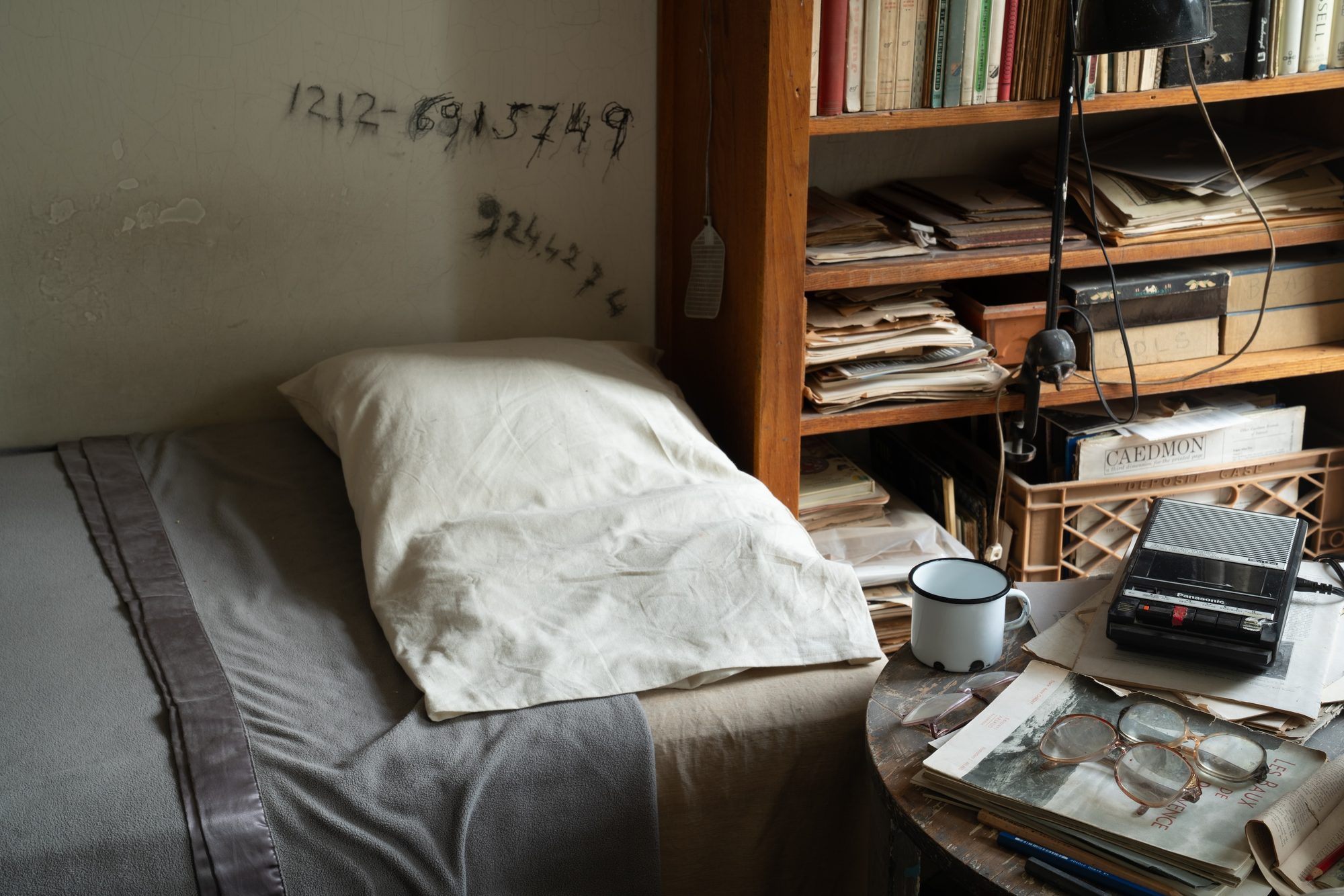
However real or true they may be19 [loud car horn], to listen to Bourgeois’s tapes is to live with the past. As she speaks, the time elapsed après-souffle collapses in on itself. Recently, yet decades ago, Louise yawned into a microphone, and as I listened, I yawned back20; on March 20, 2026, I wrote the year 1976 instead, as if I too were living in Louise’s day on tape; are the playful screams of children on the playground behind her home from her day or mine? Physical proximity lends an embodied dimension to this collapsed time—the original recorder is on a shelf next door to my office, in Bourgeois’s home, where she recorded herself. And yet, the original tapes are stored in another office, their digitized copies are on a server, and I listen through an interface that timestamps [sound of rolling gate closing] her recorded voice to its transcription.
Bourgeois’s self-documentation—accumulation as a means of survival—resonates in Georges Perec’s21 recounting of his four-year analysis, when in a “panic about losing track of [himself] [he] kept everything…and sometimes…spent a whole day sorting and sorting, imagining a classification that would fill every year, month and day of [his] life.”22 Bourgeois seemed more interested in saving-to-create and creating-to-survive than in classifying—she put saved words, clothes, and objects into her artworks throughout her career. But, whether her diaristic impulse was for art or just an honest attempt at survival23, she certainly didn’t do it to live forever.24
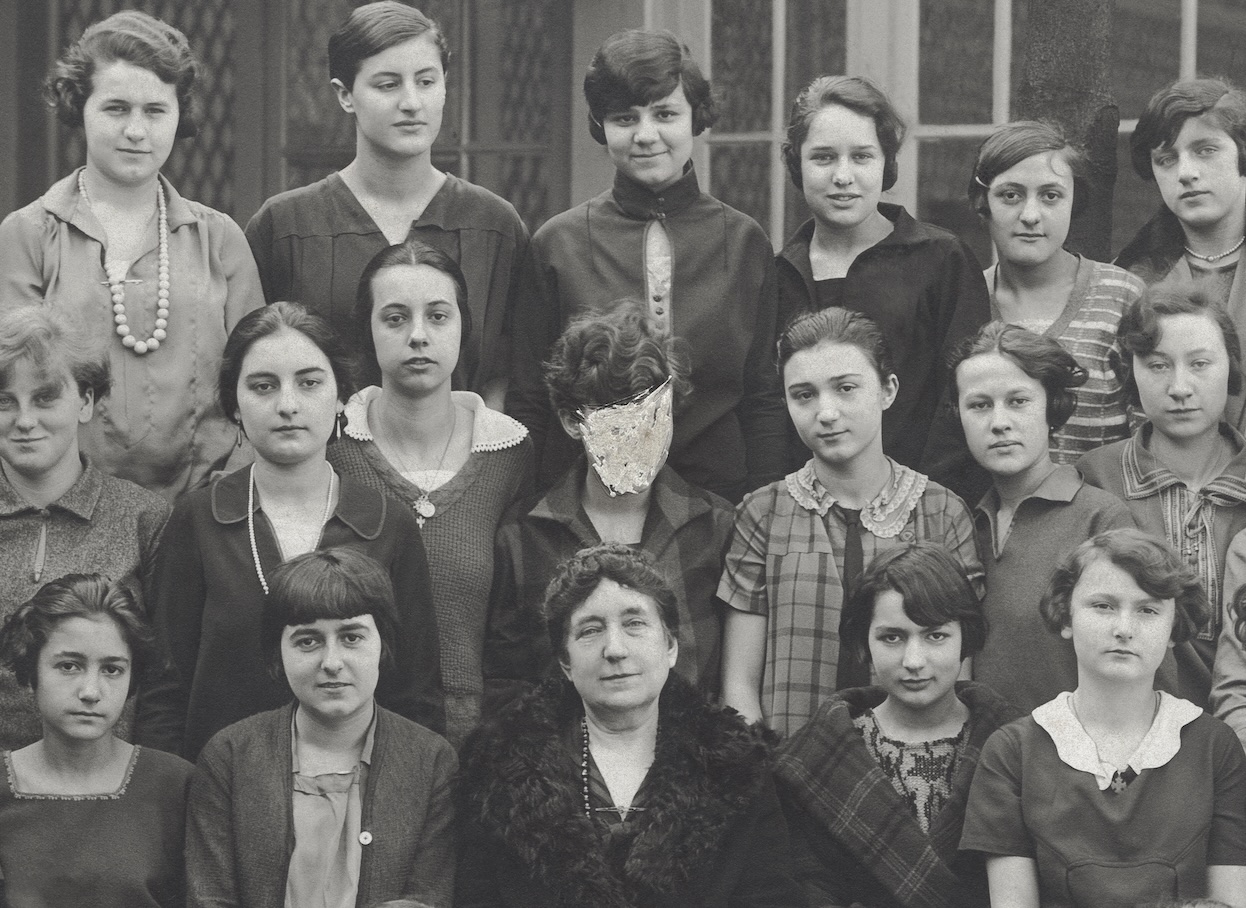
Speaking of mortality brings to mind the role of refusal in forming one’s future-ghost-self, which you can sometimes see and hear25 in photography. A subject aware of the capacity of the photograph to “‘give people an imaginary possession of’ an ‘unreal’ past or present”26 has a chance at self-effacement [creaking chair]. For example, in a photograph of her Lycée Fénelon class from 1927, of which she is at the center just behind the directrice, Bourgeois scratched her own face from the emulsion (apparently because of a bad haircut).27 Conversely, while she sometimes mentions relistening to them in the days after, and even records over herself—either intentionally, to clarify something, or presumably by accident—it seems that most of her audio diaries lay dormant from 1979, when her machine broke, until 2019, when they were digitized.
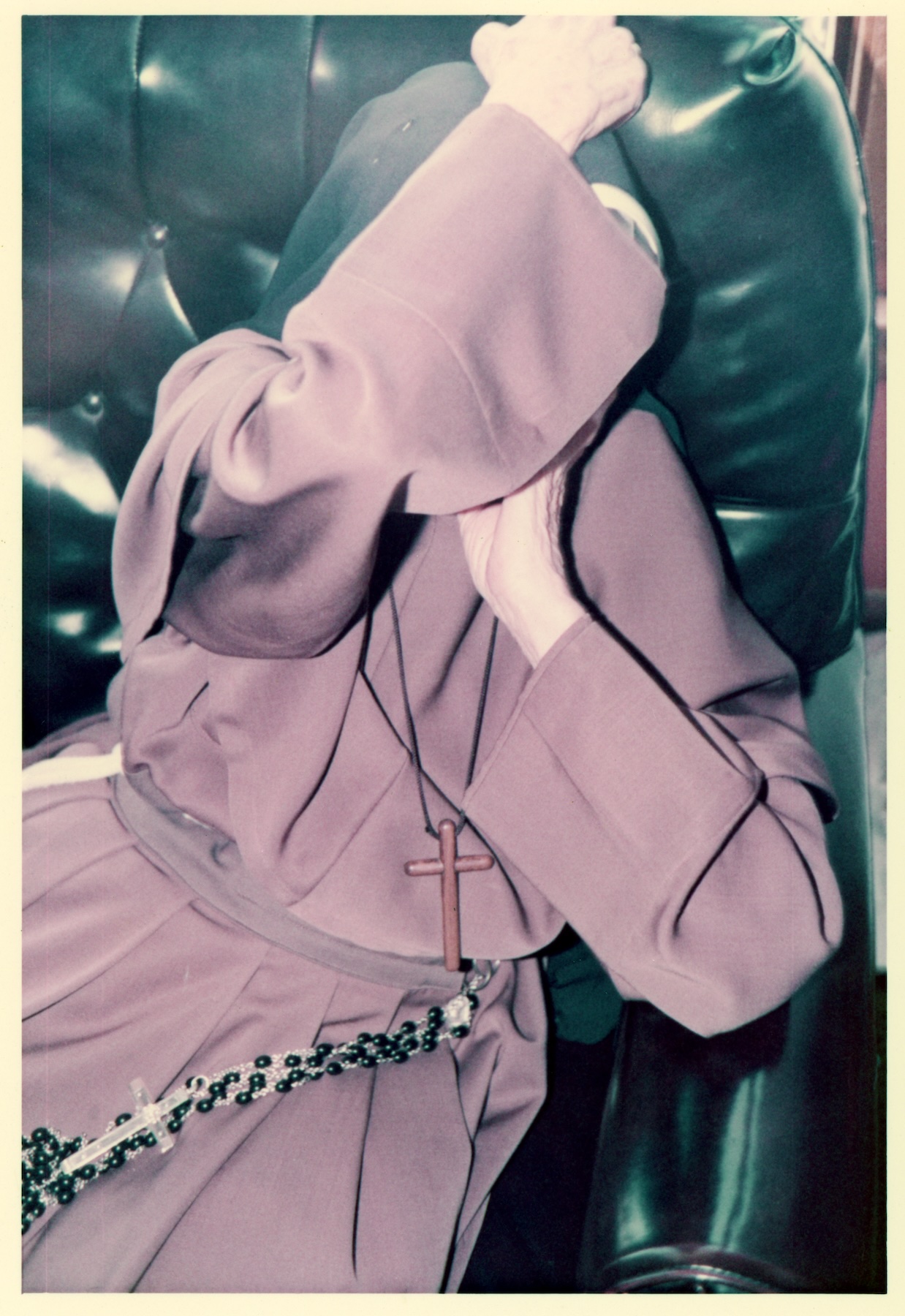
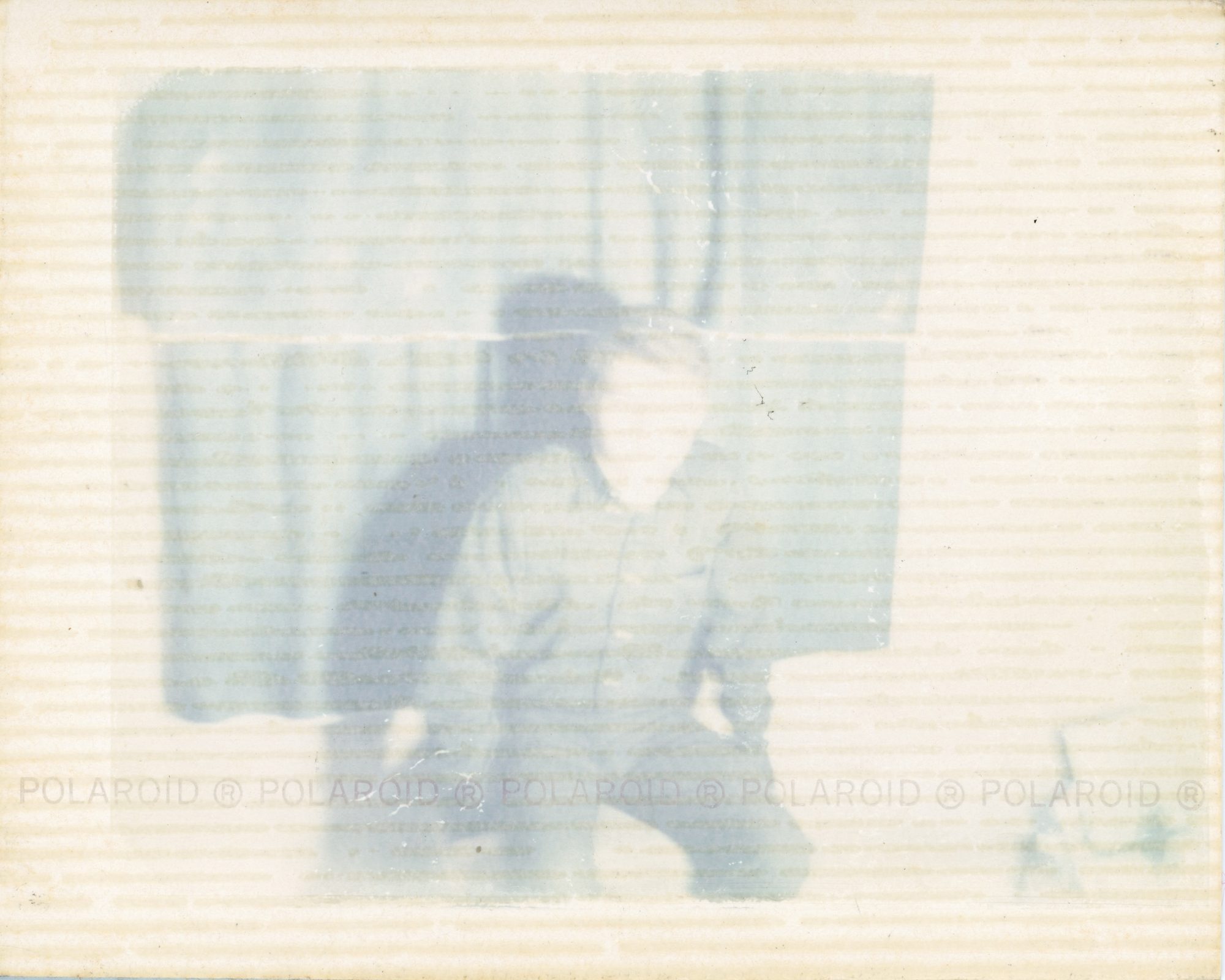
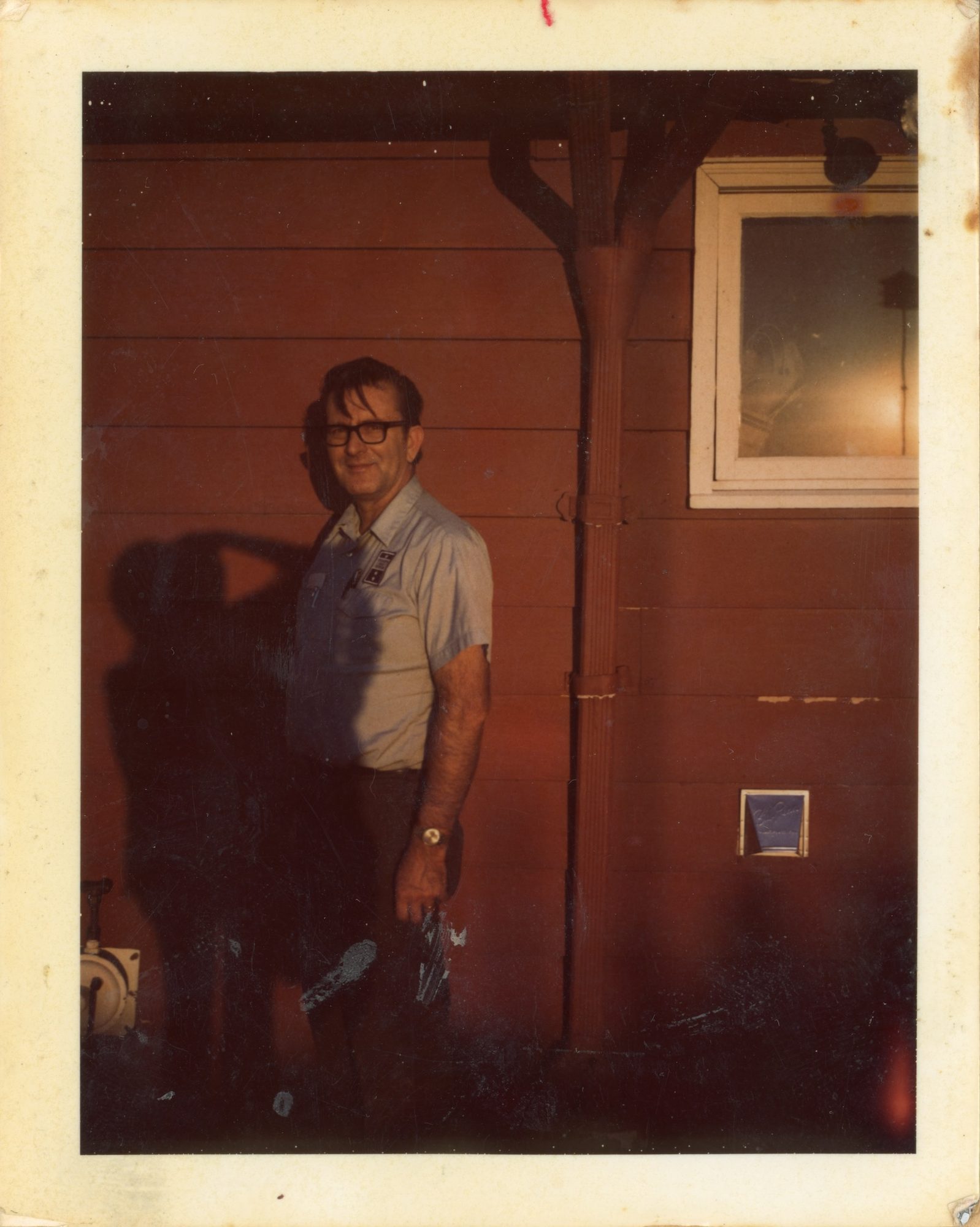
As the archivist of my family, I also see refusal in a photograph of my great-grandmother: she covers her bowed face with her right arm, while her left arm, its hand supporting her chin, extends to form a T, an echo of the crosses worn for her religious habit; one is around her neck, the other attached to her cincture… a holy trinity. As a widowed Catholic nun,28 her understanding of death incorporated the body of Christ (a ghost story par excellence) and the holy ghost. I don’t know why she denied the camera her face, but my mother remembers her doing it often and just reminded me, “Grandma-the-nun will be doing it in her grave” when this is published (forgive me!).
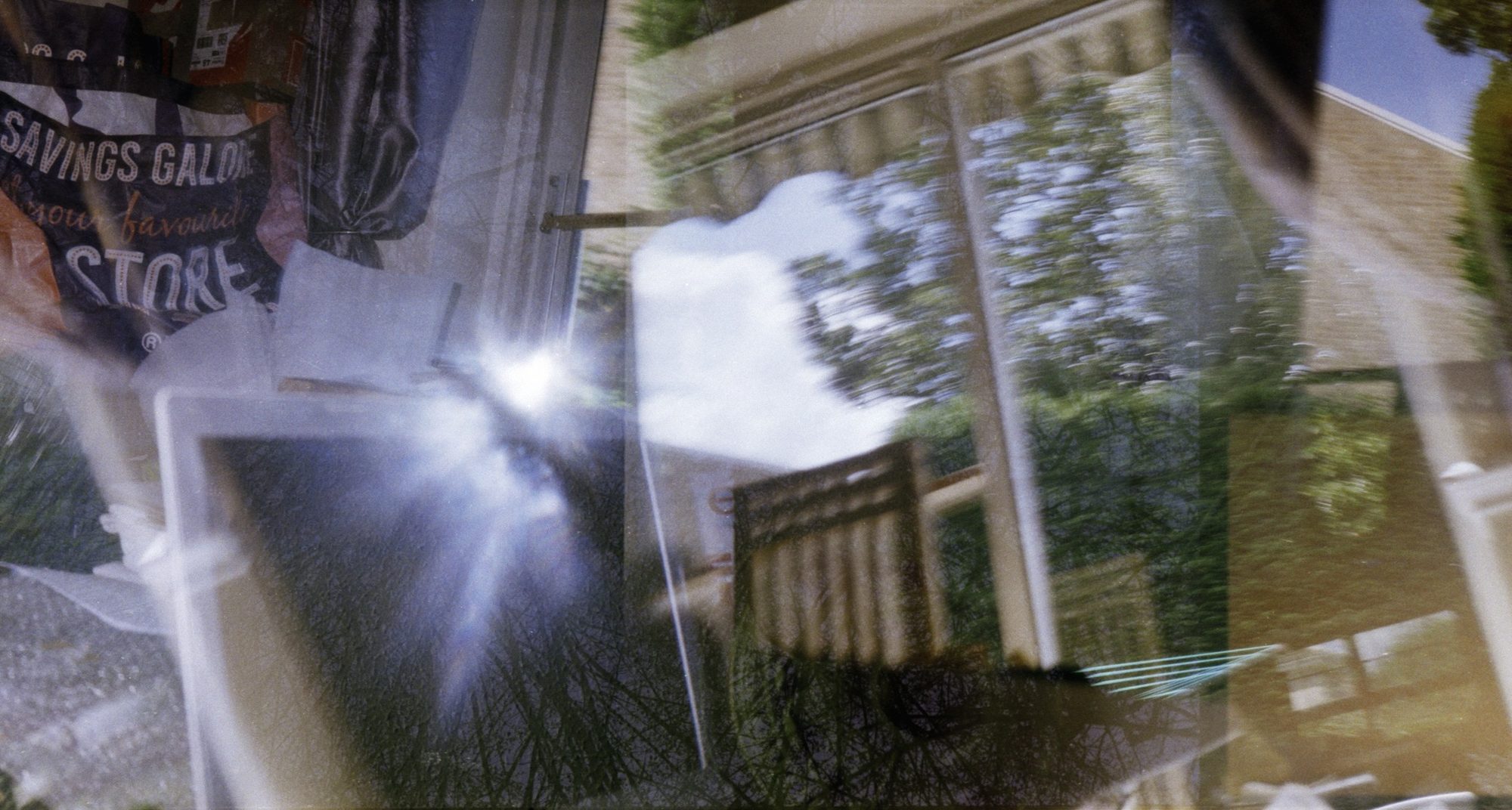
I never met the subjects of these two images. Yet today, I live with the past in the selves they fashioned from their own latency—the potential of being seen not only in the moment, but long after, when the future-ghost-self is glimpsed by another. Their latent lives even shape how I see and live with my own. Though separate from my work as an archivist, my practice as a photographer is inseparable from my being an archivist. In my work, I collaborate with the latent image in analog photography—present and invisible, seeable and “unseen.”29 I carry it in my camera, in the form of undeveloped exposed film bought from eBay, each roll a container for another person’s time and place. As an archivist, I preserve; here, I offer something up. By mixing the light that gives shape to my day with unknown ghosts and times, what was latent is made visible but remains unseeable—multiple latencies and potentials, overlaid and intertwined.
I was fortunate to see something similar in the former home of other artists: in a wall-mounted case, a framed photograph of two young boys and an adult is covered in dust; only the face of one child is smudged clean, made visible through the residuum of time by a fingertip. With their revealing gesture, someone made what was there seeable, and added to it.
- Susan Sontag, “Introduction,” in Peter Hujar, Portraits in Life and Death, second edition, New York, Liveright Publishing Corporation, 2024. Originally published in 1976.
↩︎ - Arlette Farge, The Allure of the Archives, New Haven, Yale University Press, 2015, p. 8
↩︎ - Ariella Aïsha Azoulay, Potential History: Unlearning Imperialism, New York, Verso Books, 2019, p. 167
↩︎ - Gilles Deleuze, Pure Immanence: Essays on a life, trans. Anne Boyman, New York, Zone Books, 2001, p. 29.
↩︎ - Ann Lauterbach, The Given and the Chosen, Richmond, California, 2011, p. 29
↩︎ - The Easton Foundation was established by Louise Bourgeois in the 1980s as a non-profit organization. Since the artist’s death in 2010, it has worked to preserve her legacy, namely by establishing the Louise Bourgeois Archive, opening a study center for curators and scholars, and managing the ongoing conservation of Bourgeois’s distinctive home and studio.
↩︎ - This is a term assigned by the Foundation to recordings where Bourgeois speaks diaristically, and is alone. Bourgeois referred to this practice as ‘her tapes,’ ‘the tape,’ or as ‘diary.’
↩︎ - “This is why I came and talked to my machine…this morning.” Louise Bourgeois, sound recording, c. February 1967; AV-00816 (Louise Bourgeois Archive/The Easton Foundation, New York; hereafter cited as TEF).
↩︎ - The Louise Bourgeois Archive includes the artist’s written output: process notes, dream recordings, lists, and artist’s statements composed on loose sheets of paper, in notebooks, and even on the walls of her home. Bourgeois also kept diaries nearly every year from 1923 until 2006. She referenced these writings throughout her life, both personally, in her audio diaries; and publicly, in books, interviews, and artworks. A collection of Bourgeois’s writings, consisting of over 1,000 documents is now known as the psychoanalytic writings. (https://www.theeastonfoundation.org/archive/louise-bourgeois-papers)
↩︎ - To reference the title of Arlene Farge’s book.
↩︎ - See Wikipedia entry for “Print-through” which also describes remanence.
↩︎ - Answering machine message from the author’s family archive, circa 1999.
↩︎ - Louise Bourgeois, sound recording, c. February 1969; AV-00953 (TEF).
↩︎ - Louise Bourgeois, sound recording, March 29, 1975; AV-00855 (TEF).
↩︎ - “Who the young women are I do not know. …but I sense that all three of them are looking across at me, since I am standing on the very spot where Genewein the accountant stood with his camera. … the woman on the right is looking at me with so steady and relentless a gaze that I cannot meet it for long.” W.G. Sebald, The Emigrants, trans. by Michael Hulse, New York, New Directions, 2016, p. 237
↩︎ - “I take refuge in being a goody goody.” Louise Bourgeois, sound recording, c. 1975; AV-00850 (TEF).
↩︎ - Research use is currently limited to our sharing of transcript excerpts based on keyword searches, so the textual document is generally how the content is accessed.
↩︎ - “We have embalmed our speech like a mummy, to preserve it forever.” Roland Barthes, “From Speech to Writing,” in The Grain of the Voice: Interviews 1962 – 1980, New York, Hill and Wang, 1985, pp. 3-7.
↩︎ - “[T]he absolute value of a diary depends on… honesty—that’s it, honesty is honesty, it’s as simple as that.” Louise Bourgeois, sound recording, undated, c. 1980s; AV-01231 (TEF).
↩︎ - Contagious yawning is hypothesized to be a function of socialization—we mimic others’ behavior to form a social bond. ↩︎
- There is a first edition of Perec’s Un Homme Qui Dort in her library. Although there are no clear signs of her having read it, how fitting that she, who suffered from sleeplessness and lived in the city that never sleeps, had this title so near her bed.
↩︎ - Georges Perec “The Scene of a Strategem,” in Species of Spaces and Other Pieces, trans. John Sturrock, London, Penguin Books, 2008, p. 171.
↩︎ - “This is what the tape is – the tape is an attempt at surviving.” Louise Bourgeois, sound recording, c. May 1973; AV-00849 (TEF).
↩︎ - But Finnish artist and philosopher Erkki Kureniemi did. See Eivind Røssaak, “FileLife: Constant, Kurenniemi, and the Question of Living Archives” in Memory in Motion: Archives, Technology, and the Social, Amsterdam, Amsterdam University Press, 2017, p.187
↩︎ - Tina Campt, Listening to Images, Durham, Duke University Press, 2017.
↩︎ - Gordon, Ibid, p. 104.
↩︎ - Frances Morris and Marie-Laure Bernadac, Louise Bourgeois, London, Tate Publishing, 2007, p. 115.
↩︎ - She was a Franciscan sister of St. Elizabeth of the Third Order, which allowed entry of widows and other previously disallowed people into cloistered religious communities.
↩︎ - See Agnes Matthias’s description in Evelyn Richter: Von der Latenz der Bilder, Dresden, hesperus print Verlag, 2018, p. 47
↩︎
/
Sans date. Avec l’aimable autorisation de l’auteur.